Two fundamentally different philosophies. Catamarans win on deck space and stability; motor yachts win on speed and amenity. We break down every trade-off by group size, budget, and occasion.
It's the question every first-time charterer eventually asks: catamaran or motor yacht? The honest answer depends entirely on what you want from your day on the water. Both have genuine advantages — and understanding them will help you choose with confidence rather than guess.
The case for a catamaran
A catamaran's defining advantage is space. Two hulls mean a wide beam, and a wide beam means an enormous amount of usable deck area relative to overall length. A 45-foot catamaran will feel significantly larger than a 45-foot monohull motor yacht because the beam is typically 25 to 30 percent wider.
That space translates to social comfort. Large groups — families with children, birthday parties, corporate events — can spread out, find shade, find sun, and generally avoid the compressed feeling that comes with packing twelve people onto a motor yacht designed for ten.
The second advantage is stability. Twin hulls mean dramatically less roll than a monohull in any sea state. If you have guests who are prone to seasickness, or if you're planning to serve a sit-down lunch at anchor, a catamaran is the more comfortable choice. The motion is not the same as being on a large cruise ship — you still feel the sea — but it's considerably more predictable than a monohull.
Catamarans are also well-suited for extended anchoring. The bridge deck between the hulls creates a protected social space that stays dry in almost all conditions, and the wide anchor platform at the bow makes getting in and out of the water simple.
The case for a motor yacht
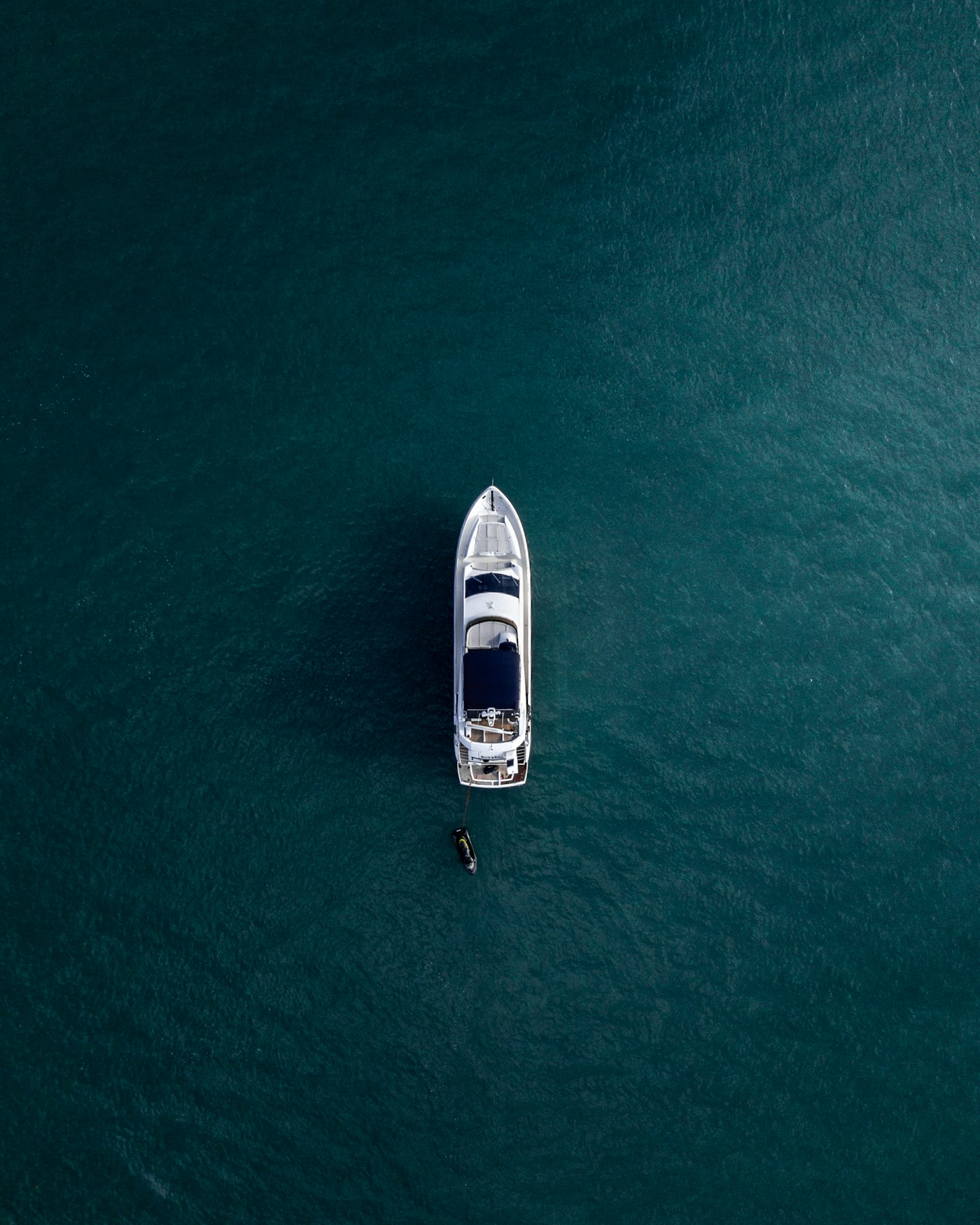
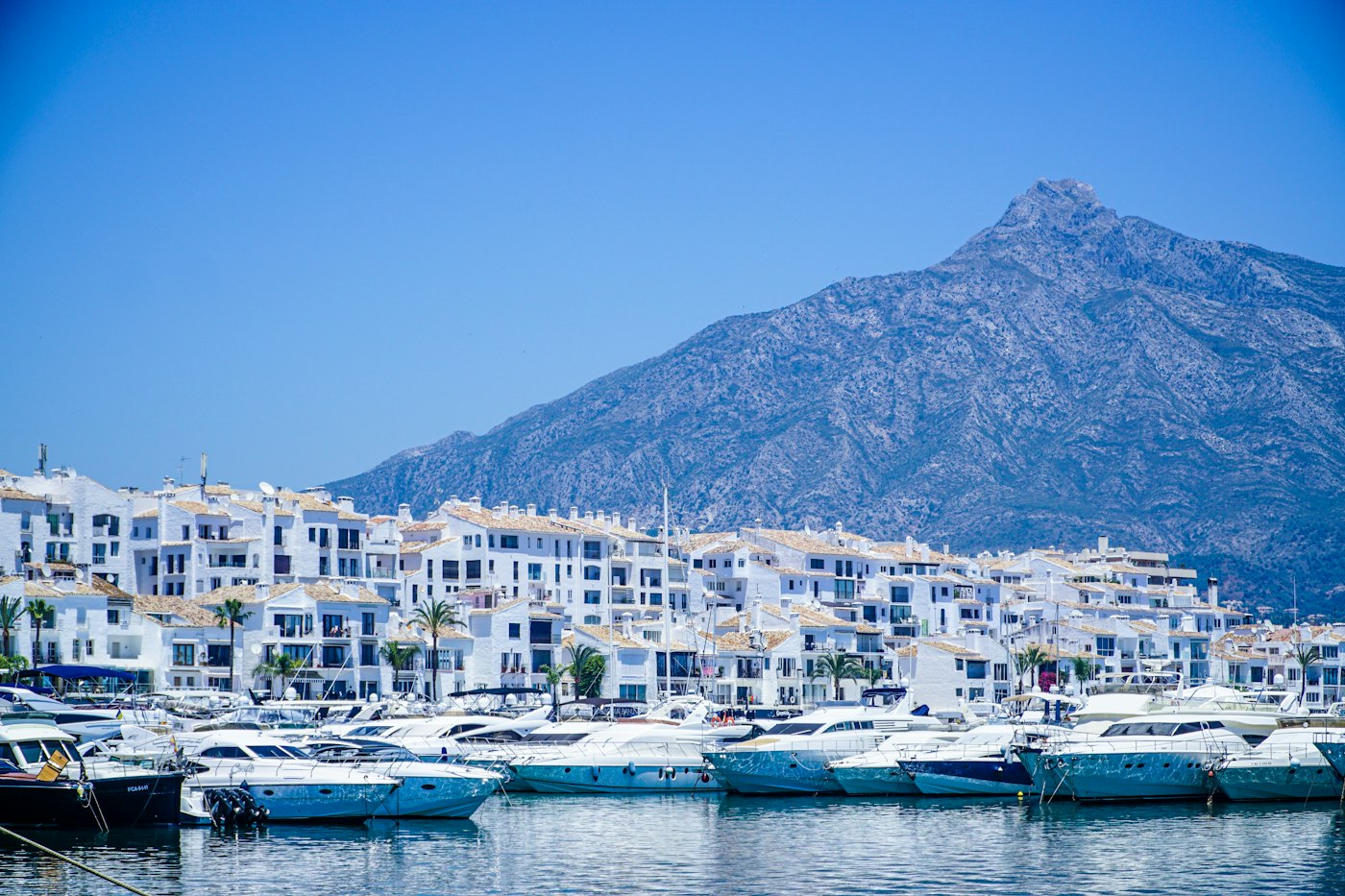
Motor yachts win on speed and range. A well-powered motor yacht will cover the distance from Puerto Banús to Gibraltar in under two hours. The same trip on a catamaran under sail takes most of the day. If your priority is reaching a specific destination — a particular beach, a seafood restaurant in another port, a dolphin-watching spot in the Strait — a motor yacht gets you there and back with time to spare.
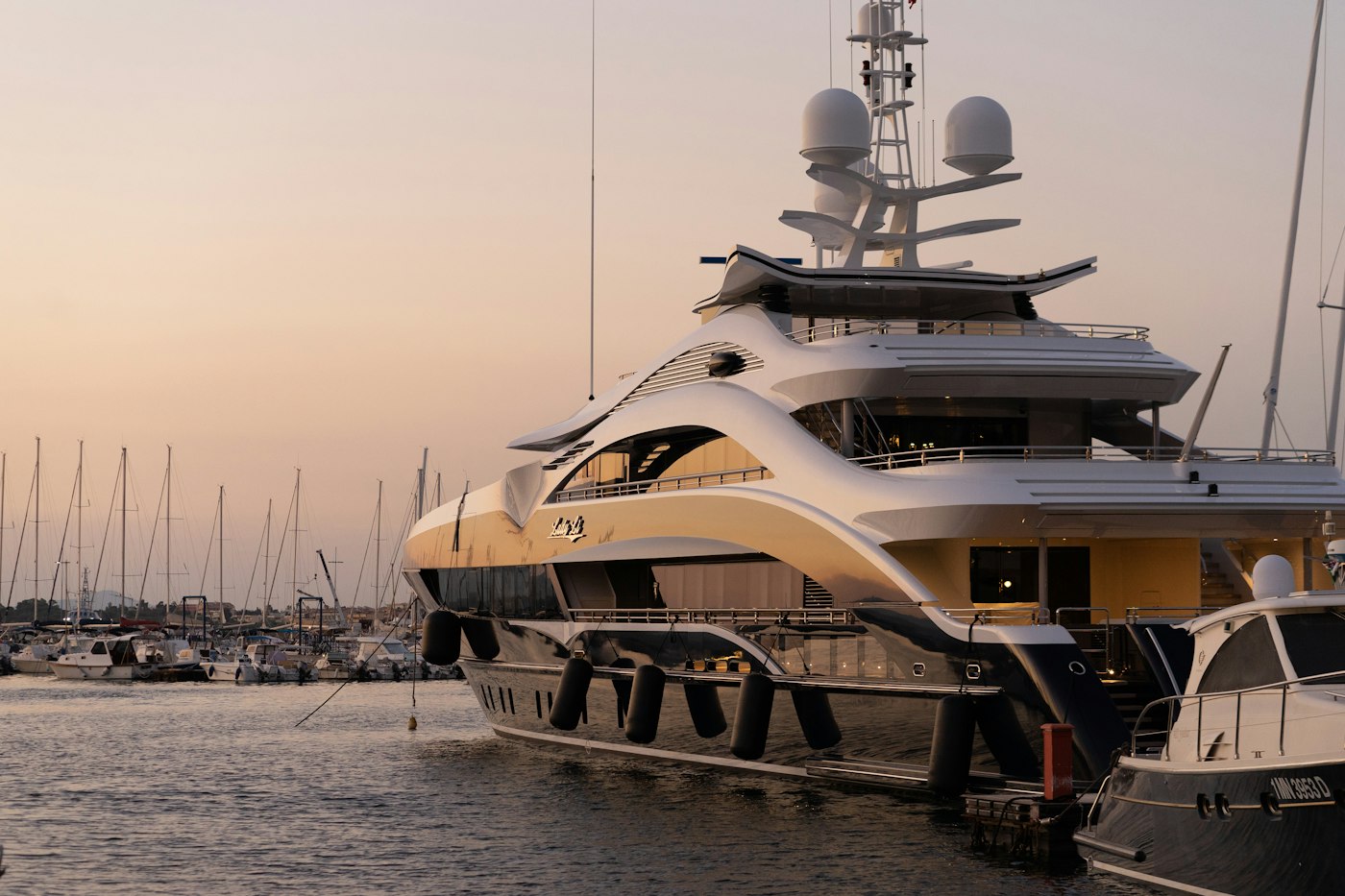
Motor yachts also tend to offer superior interior amenity for their size. The hull form that makes them fast also allows for a deeper, more spacious interior — well-equipped galleys, proper shower facilities, and comfortable sleeping cabins if you're considering an overnight charter.
For smaller groups — couples, families of four or five, intimate celebrations — a motor yacht often feels more purposeful and premium. The focused layout suits the group rather than leaving you rattling around a wide-open deck designed for twice as many people.
The deciding factors
Group size: Over ten guests, catamaran almost always wins on comfort. Under six, a motor yacht is the more intimate and polished choice.
Sea conditions: If the forecast shows anything above Force 3, guests prone to motion sickness will be more comfortable on a catamaran. In flat, calm water, the difference is minimal.
Itinerary ambition: Covering distance? Motor yacht. Anchoring out and swimming all day? Catamaran.
Budget: For equivalent capacity, catamarans are typically priced 10 to 20 percent higher than motor yachts. The extra beam costs more to berth, more to maintain, and that's reflected in the charter rate.
Our recommendation
For a group of eight to twelve on a full-day social charter — birthday, hen party, corporate day out — we'd recommend a catamaran every time. For a couple or small family who want to cover some coastline and enjoy a polished, fast-moving day on the water, a motor yacht is the better fit. Both are outstanding charter experiences when matched to the right occasion.